
Introduction
Speed beats size in modern fulfillment. Robotics software is now the quiet backbone of that speed, weaving people, machines, and inventory into one flow. Picture a regional 3PL on a rainy Monday: weekend orders spike 4x, carriers shuffle slots, and returns stack up by noon. Industry numbers show that real-time orchestration can cut idle time by 18–25%, yet many sites still struggle to route tasks across zones. With tools like automated warehouse software, you can coordinate AMRs, conveyors, and pick stations in a single view—without throwing more bodies at the problem. But here is the question: if the tech is available, why do go-lives still slip, and why do gains fade after peak? Maybe the issue is not capacity at all. Maybe it is how rules, data, and machines are stitched together (and kept stitched during change).

Let’s unpack that, then move to what to do next.
The Hidden Friction Legacy Tools Don’t Show on the Demo
Where do traditional stacks fall short?
Teams buy automated warehouse software expecting order, not drift. Yet the classic stack—WMS rules here, WES there, plus a separate AGV fleet manager—creates blind spots. Exceptions bounce between systems. Latency creeps in at the worst moment. A patchwork of OPC UA and MQTT bridges becomes fragile when you add a new zone or carrier workflow. SLAM updates for AMRs may run, but slotting does not adjust, so robots queue in hot aisles. There is also the “planner gap”: forecasts live in MES/ERP, while real tasks live in the floor scheduler. No shared model, no shared truth. In the end, operators carry the load with radio calls and manual overrides—funny how that works, right?
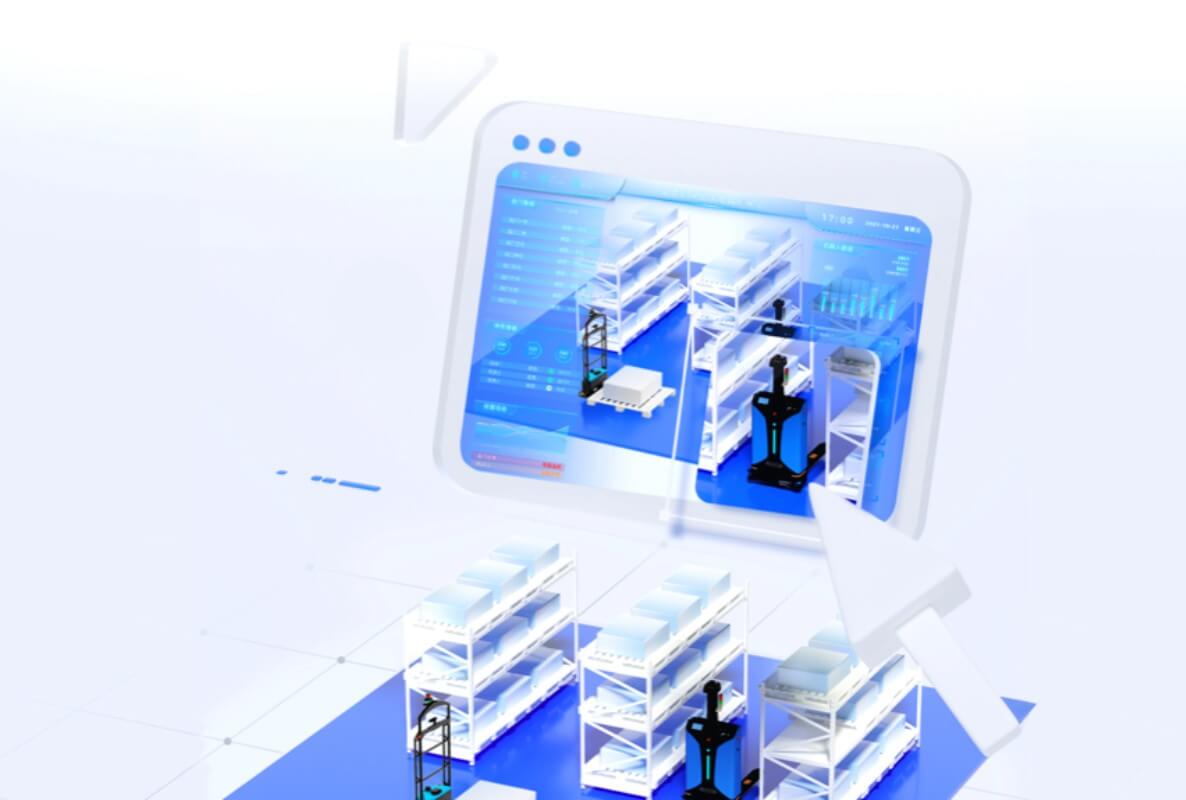
Look, it’s simpler than you think. The pain points come down to four things: rigid task dispatch, siloed data, slow feedback, and brittle integration. Rigid dispatch ignores real constraints like battery cycles and power converters under stress. Siloed data stops sensor fusion from improving pick-paths in real time. Slow feedback means your edge computing nodes cannot rebalance AMR traffic before congestion forms. And brittle integration makes every small change a mini project. Fix these, and you get flow. Keep them, and every peak becomes an incident report.
From Bottlenecks to Benchmarks: A Forward-Looking Playbook
What’s Next
Progress follows a clear principle: close the loop between plan, sense, decide, and act. Modern automated warehouse software leans on three pillars to do that. First, a unified graph of assets and orders, so the system “sees” people, robots, conveyors, and bins as one network. Second, a real-time decision layer that uses a message broker to coordinate AMRs and pickers with millisecond targets, not minute windows. Third, an execution layer that pushes micro-updates to PLCs and AMR fleets via stable adapters, often ROS2-capable, so changes land fast and safe. This is not hype. It is basic control theory applied to logistics. The twist is scale—and that’s where cloud-plus-edge, digital twins, and lightweight simulation come in.
Here is the comparative view. Rule-based only? Good for steady days, but brittle under volatility. Heuristic plus feedback? Better; it learns from queue lengths and dwell times. Heuristic plus predictive models plus guardrails? That’s the sweet spot: it adapts to variance, while keeping safety and SLAs intact. Insert small steps: start with zone-level telemetry, wire it into the decision layer, run A/B routes for a week. Then expand to cross-zone orchestration. Results tend to stack—cycle times fall, buffers shrink, and labor is used where it matters most. And yes, utilization gets calmer as variability rises—counterintuitive, yet true when the loop closes fast.
To choose well, use three metrics. 1) Coordination latency: end-to-end, sense-to-act under load. 2) Adaptability: how fast can you add a new carrier flow, AMR type, or shift rule without custom code. 3) Explainability: can ops see why the system dispatched a task, in human terms. Meet these, and you will scale upgrades without fear. Miss them, and every change is a fire drill. Keep it pragmatic, keep it testable, and keep humans in the loop. For a deeper look at how these building blocks come together in practice, see SEER Robotics.
